
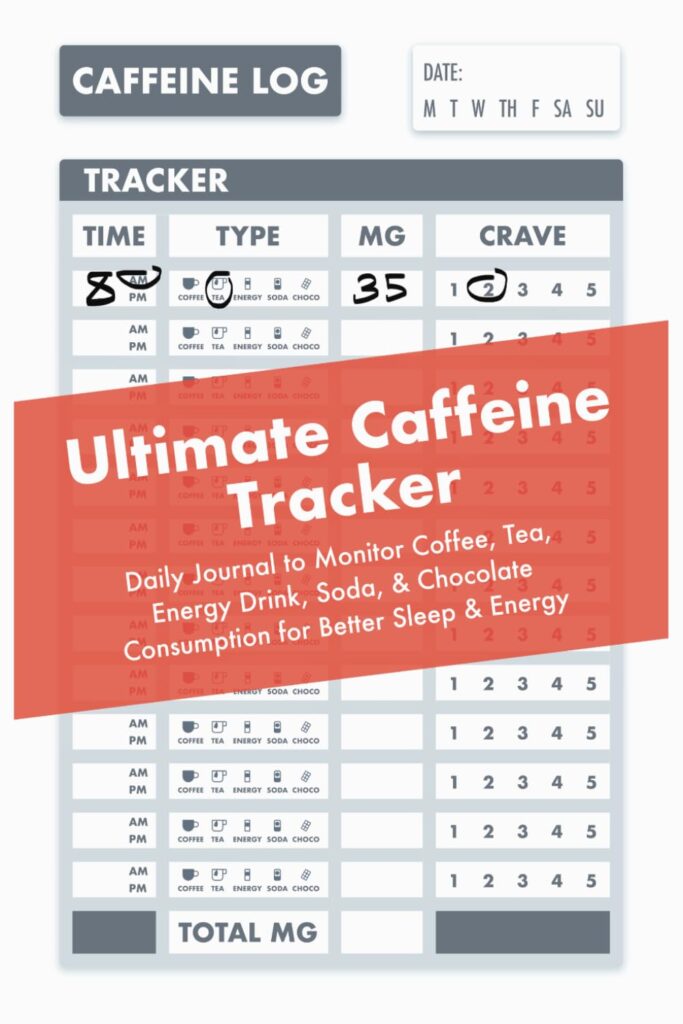
Ultimate Caffeine Tracker
Daily Journal for Better Sleep & Energy
Track your daily intake of coffee, tea, energy drinks, soda, and chocolate with the Ultimate Caffeine Tracker. Manage your caffeine consumption, improve sleep, and maintain steady energy throughout the day.
Caffeine Half Life Calculator: Track How Long Caffeine Stays in Your Body
Caffeine is one of the most widely consumed stimulants in the world. Found in coffee, tea, energy drinks, sodas, and supplements, it gives people the boost they need to stay awake, focus better, and feel more energized. But caffeine does not leave your body right after you drink it. Instead, it takes time for your liver to metabolize and eliminate it. The speed of this process is measured by something called the half life of caffeine.
Understanding the half life of caffeine is essential because it can affect your physical health, mental well-being, and even emotional stability. Too much caffeine can increase overthinking, worsen stress levels, and interfere with sleep. If you have ever found yourself lying in bed replaying thoughts endlessly after an afternoon coffee, you have experienced how caffeine interacts with the mind.
The caffeine half life calculator on this page helps you track exactly how long caffeine will stay in your body. By knowing this, you can plan your daily routine more effectively, make better lifestyle choices, and avoid the cycle of late-night overthinking caused by caffeine lingering in your system.
![OC] Visualizing Caffeine Halflives & Bedtime : r/dataisbeautiful](https://external-preview.redd.it/MAKlqII_2Ix1MKFJucW25Z21qmBgTjZih2E1iyzWk6A.jpg?auto=webp&s=fbc2f466d957c7789706f7564b8c55c8ba59cc34)
Caffeine Half Life Calculator (Interactive Tool)
The caffeine half life calculator is designed to estimate how much caffeine remains in your body after a certain number of hours. You can input the amount of caffeine you consumed, the time since intake, and additional factors such as age group or pregnancy status. The calculator then shows you how much caffeine is still present in your bloodstream.
This tool is based on the average caffeine half-life in adults, which is usually 4 to 6 hours. For example, if you drink 200 mg of caffeine at 10 a.m., you may still have about 100 mg active in your system by 2 to 4 p.m. This lingering effect explains why some people feel alert long after drinking coffee.
The calculator also helps people on wellness journeys such as a 14 day no sugar plan, where tracking both caffeine and sugar intake can improve energy stability. By using the calculator, you can see how caffeine interacts with your body and avoid late-night spikes that can disrupt the balance of the health triangle: physical, mental, and social health.
What is the Half Life of Caffeine in the Human Body
The half life of caffeine is the amount of time it takes for your body to break down and eliminate half of the caffeine you consumed. For most healthy adults, this process takes about 4 to 6 hours. However, depending on lifestyle factors, genetics, and age, it can be shorter or much longer.
Caffeine is absorbed quickly into the bloodstream and processed by the liver. The breakdown results in smaller compounds such as paraxanthine, which increases alertness, and theobromine, which improves blood flow. These compounds eventually leave the body through urine. While the amount of caffeine decreases gradually, its stimulating effect can still influence brain activity for hours, often fueling overthinking and racing thoughts.
For people trying to reduce sugar and caffeine intake as part of a 14 day no sugar plan, understanding this half life can make a real difference. If you consume caffeine in the morning, you may still feel its effects in the evening. This can affect the health triangle by reducing physical rest, creating mental fatigue, and limiting social interactions due to irritability or anxiety.

Factors That Influence the Half Life of Caffeine
The way caffeine behaves in the body depends on several factors. Age is important: newborns and children process caffeine slowly, while healthy adults metabolize it more efficiently. Older adults may again experience slower elimination due to changes in liver function.
Pregnancy can extend caffeine’s half life significantly, sometimes to 8 to 10 hours or more. This is why medical professionals advise pregnant women to keep caffeine intake within safe limits. Lifestyle factors such as smoking, alcohol use, and certain medications also affect how quickly caffeine is processed.
Genetics is another factor. Some people are naturally fast caffeine metabolizers while others are slow. If you are prone to anxiety, jitteriness, or overthinking, caffeine may stay in your system longer and amplify these effects. Using the caffeine half life calculator allows you to see a general estimate, but your personal reaction will depend on these unique characteristics.
Caffeine Half Life in Different Drinks and Supplements
Different drinks and supplements contain different amounts of caffeine, which changes how long the stimulant remains in your system. A regular brewed coffee may have 80 to 120 mg per cup, espresso contains 60 to 70 mg per shot, and decaf still has small amounts of caffeine, usually 5 to 15 mg.
Teas vary as well. Black tea contains 40 to 70 mg per cup, green tea about 30 to 50 mg, and matcha often has higher concentrations since the powdered leaves are consumed directly. Herbal teas like chamomile are caffeine free and a good option in the evening to reduce restlessness and mental overthinking before bed.
Energy drinks and supplements are another major source. A can of Monster or Red Bull can contain 80 to 160 mg of caffeine. Pre-workout supplements or caffeine anhydrous pills may contain 200 mg or more in a single serving. Since the half life remains the same regardless of the source, higher doses simply mean caffeine will be present in the body for longer. A caffeine half life calculator is especially useful in these cases to prevent caffeine overload.
Why Understanding Caffeine Half Life is Important
Awareness of caffeine half-life helps you manage not only your energy but also your overall well-being. Drinking caffeine too late in the day can reduce deep sleep quality, leaving you physically tired and mentally restless. This lack of rest often triggers overthinking, stress, and poor focus the following day.
For athletes, understanding caffeine half life improves performance. Taking caffeine before workouts can enhance endurance, but if mistimed, it can cause a crash afterward. Students and professionals can also use this knowledge to manage concentration without suffering from anxiety or sleepless nights.
Caffeine management connects closely to broader health practices such as the 14 day no sugar plan. Both caffeine and sugar affect energy spikes, mood swings, and long-term health. Using a caffeine half life calculator alongside a balanced diet and paying attention to the health triangle — physical, mental, and social health — creates a healthier, more balanced lifestyle.
Frequently Asked Questions (FAQs)
How long is caffeine’s half-life?
The average caffeine half-life is 4 to 6 hours in adults, but it can range from 2 to 12 hours.
Does caffeine have a half life?
Yes, caffeine has a biological half life, which refers to the time needed for your body to eliminate half of it.
What is the half life of caffeine in coffee and tea?
Coffee usually contains 80 to 120 mg of caffeine per cup while tea contains 30 to 70 mg. The half life remains the same regardless of the source.
How long does 200 mg of caffeine stay in your system?
After 5 hours, about 100 mg remains. After 10 hours, about 25 to 50 mg may still be active in your body.
What does half life of caffeine mean?
It is the time required for your body to metabolize and eliminate half of the caffeine you consumed.
What is the biological half life of caffeine in the body?
In adults, it averages 4 to 6 hours. In pregnancy or with slower metabolism, it may be much longer.
How does caffeine half-life vary by age, weight, and genetics?
Babies and older adults take longer to process caffeine. Genetics and body weight also play a role in caffeine sensitivity.
Conclusion
Caffeine is a powerful stimulant that affects your body and mind for hours after consumption. Knowing its half life can help you plan your intake, improve sleep quality, and avoid negative side effects such as anxiety and overthinking.
The caffeine half life calculator on this page is a practical tool for anyone who wants to track caffeine metabolism. Whether you drink coffee, tea, or energy drinks, it gives you a clear estimate of how much caffeine remains in your system.
Combine this tool with mindful lifestyle choices such as following a 14 day no sugar plan and paying attention to the health triangle of physical, mental, and social well-being. By doing so, you can enjoy caffeine’s benefits while avoiding its downsides. Bookmark this page, share it, and use the caffeine half life calculator whenever you want to stay in control of your energy and health.