

Understanding Overthinking in Relationships
Understanding the nature of Stop overthinking in a relationship is essential to breaking free from its grip. As an overthinker, I’ve come to recognize how replaying every conversation, scrutinizing hidden meanings, and focusing on the smallest things can spiral into a relentless worry cycle. This mental process involves persistent rumination, introspection, and self-questioning, often fueled by anxiety triggers and negative experiences that amplify emotional distress and relational tension. The cognitive patterns that lead to obsessive thinking create a negative feedback loop, generating emotional strain, mental fatigue, and emotional overload that interfere with healthy communication and trust.

In partnerships, this constant analysis and fixation can damage relationship satisfaction by fostering doubt, fear, and uncertainty, leading to mistrust and emotional vulnerability. The behavioral consequences include communication breakdowns, conflict escalation, and behavioral inhibition, all of which heighten psychological effects and disrupt interpersonal dynamics. I’ve personally observed how the internal dialogue of mental rehearsing and thought persistence results in decision paralysis and a distorted perception bias, causing one to misinterpret partner perceptions and fuel further emotional turbulence.
1.Overthinking often stems from deep insecurities shaped by past experiences or traumatic relationships, where broken trust leaves lasting emotional pain and relational insecurity.
2.These overthinking patterns involve reassurance seeking and overanalyzing a partner’s actions, often misreading neutral comments as signs of betrayal due to perception bias and negative perception.
3.The mind’s tendency toward cognitive distortion and mental rumination fuels a negative feedback loop of worry, self-doubt, and emotional overreaction, escalating conflict and increasing emotional sensitivity.
4.This cycle is exacerbated by emotional vulnerability, partner mistrust, and perceived threats, which trigger intense emotional turmoil and affective disturbance that undermine mental health and emotional regulation.
5.Recognizing these mental patterns and behavioral patterns calls for increased self-awareness and adoption of coping strategies such as mindfulness, self-compassion, and present moment awareness to interrupt cognitive scrutiny and reduce cognitive overload.
6.Developing healthy emotional boundaries and practicing emotional regulation helps manage emotional distress and rebuilds trust, allowing one to break free from the exhausting cycle of mental vigilance and emotional exhaustion.
Signs You Might Be an Overthinker in Your Relationship
Being caught in the cycle of overthinking often links closely with anxious attachment styles and deep insecurity within a romantic relationship. This can cause you to constantly dissect your partner’s words and actions, searching for hidden meanings or negative implications that lead to frequent misunderstandings and communication strain. Such overanalysis intensifies relational tension and emotional vulnerability, sometimes triggered by unresolved past relationship issues or old hurts that block healing and foster resentment. This toxic cycle of revisiting past grievances bleeds into present experiences, fueling excessive worry and anxiety about the future relationship — from imagining worst-case scenarios like breakups or infidelity to a persistent fear and apprehension that drain your emotional energy.
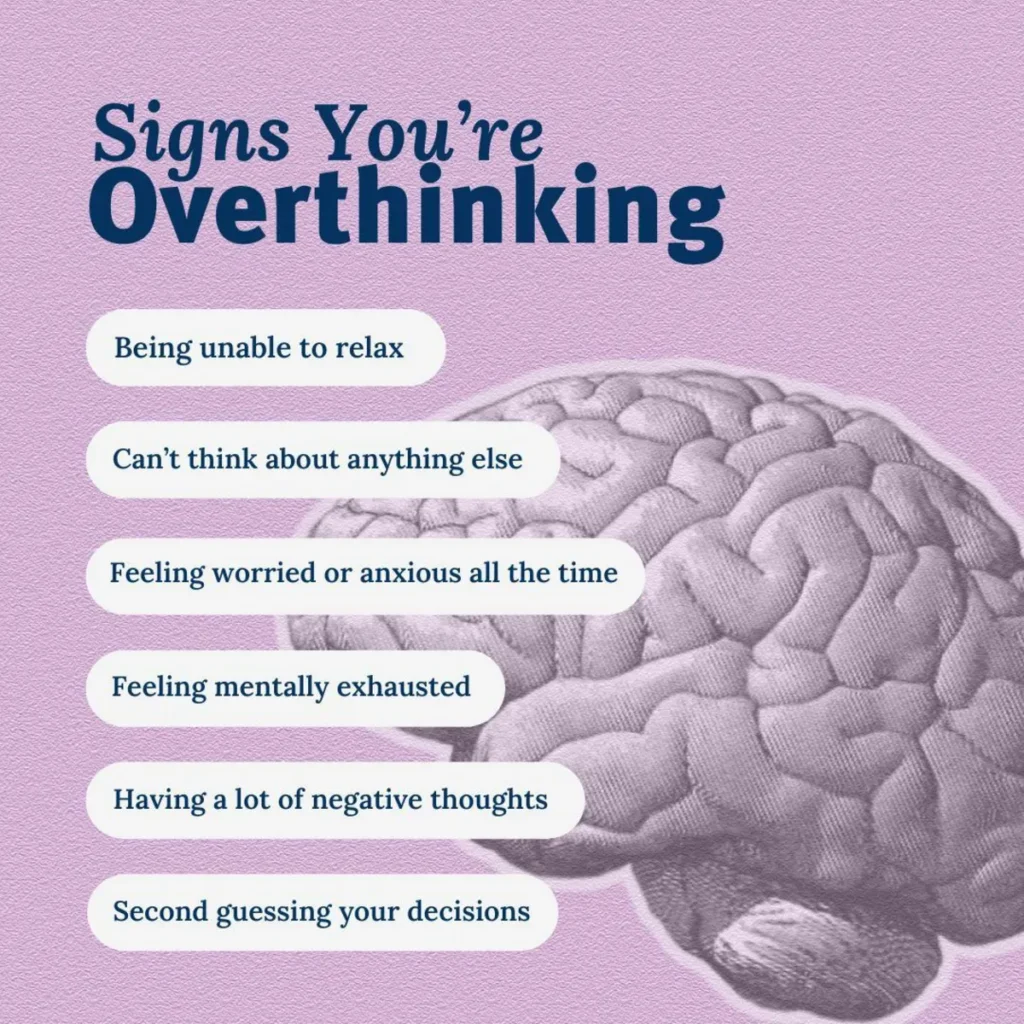
You might find yourself caught in reassurance seeking and craving constant love validation or commitment validation because of deep-rooted insecurities and a lack of self-assurance. This often manifests as a need for repeated affirmations of “I love you,” preoccupying your mind with doubts and negative thoughts that overshadow the genuine connection and moments of joy or fulfillment you experience. These overthinking patterns create emotional fatigue and mental rumination, causing behavioral effects such as communication breakdown and increased emotional dependency.
- Persistent emotional overwhelm and self-doubt can erode relationship satisfaction and weaken trust.
- The fear of loss or emotional strain may lead to relationship anxiety and difficulties in emotional regulation.
- Despite these challenges, developing mindfulness and a more balanced approach to your perception and interaction within the partnership is key to fostering a healthy relationship filled with happiness and psychological impact that supports growth rather than strain.
Five kinds of relationship rumination
In romantic relationships, overthinking often takes the form of rumination, a cognitive habit where the mind gets caught in endless loops of repetitive thinking and ruminative thoughts. This snowball effect creates momentum that fuels emotional fixation and cyclical rumination, leading to relationship stress, emotional burden, and mental fatigue. Understanding the five kinds of relationship rumination helps increase awareness, foster empathy and curiosity, and break free from these draining psychological patterns and cognitive loops that contribute to emotional overload and mental exhaustion.
Blame.
The first type, Blame, revolves around assigning fault for problems in the relationship, often labeling a partner as selfish, wrong, or even an idiot due to unacceptable or intolerable behavior. This triggers a blame cycle rooted in past events and feelings of unfair treatment or being taken advantage of, where selective recall and flaw magnification focus attention on partner flaws while overlooking their good intentions. Such misinterpretation fuels resentment, accusation, and guilt, which often lead to defensiveness, blame shifting, and ongoing conflict. The emotional fallout includes deep emotional pain, mistrust, and hurt feelings, escalating partner conflict through persistent fault assignment and blame attribution. This cycle of emotional blame and perceived injustice intensifies negative emotions and relational conflict, creating a swirl of emotional distress, grievance, and emotional turmoil that can severely strain the bond between partners.
Control.
The second type, Control, often arises from a desire to manage emotions and situations with rationality, wisdom, and a sense of kindness, yet it can slip into rigidity and authoritative stance within the relationship. Driven by a need for a desired future outcome or partner fulfillment, this urge for control manifests in behavioral, cognitive, and interpersonal control, sometimes resembling the roles of a therapist, parent, or boss directing immediate action or planning next steps, like organizing travel plans or managing long-distance relationships. The mindset often falls into binary thinking—seeing things as good versus bad or right versus wrong—which fuels a control cycle dominated by moralistic thoughts and externally defined truths. This can lead to inflexibility, tension, and mistrust, where power dynamics create ultimatums and strict relationship expectations. Balancing curiosity and openness to possibilities helps break free from this cycle, fostering healthier communication and flexibility rather than an exhausting struggle for dominance.
Doubt.
The third type, Doubt, centers on a struggle between perceptions, imagination, and reality questioning, where uncertainty clouds judgment about a partner’s choice and the relationship’s future. This internal conflict breeds self-doubt and trust issues, as intuition becomes unreliable, leading to misguidance and poor choices. The absence of guarantees and insufficient evidence fuels doubt reinforcement, trapping one in chronic doubt cycles marked by overthinking, memory distrust, and distrust of one’s own gut feelings. Worries spiral into worst-case scenarios such as divorce anxiety or child custody concerns, alongside unrelated fears like health concerns or the risk of illnesses, which further amplify emotional distress and relationship fear. This ongoing fear cycle weakens trust, deepens emotional vulnerability, and challenges uncertainty tolerance, making it difficult to cultivate self-trust and confidently move forward without constant choice questioning.
Worry.
The fourth type, Worry, shares many roots with doubt but focuses more on the persistent unease about partner choice and the uncertainty of the relationship’s future. Fueled by fluctuating perceptions, imagination, and reality questioning, worry amplifies fears of love loss, date cancellations, or even serious concerns like health fears including type-1 diabetes or COVID risk. This constant mental search for evidence and decision support feeds a chronic doubt cycle, where self-judgment, intuition distrust, and memory distrust heighten emotional distress and relationship fear. The fear cycle twists worry into catastrophic thinking about worst-case scenarios such as divorce anxiety, child custody concerns, or job safety. This ongoing emotional vulnerability erodes trust, weakens self-trust, and challenges the ability to tolerate uncertainty, making choice questioning a relentless and exhausting mental habit.
Self-pity.
The fifth type, Self-pity, traps individuals in self-pity cycles fueled by a victim mentality and feelings of helplessness amid life challenges and perceived unfairness or undeserved suffering. This mindset fosters a victim role where one may rely heavily on a partner’s rescue or feel a loss of well-being dependency, leading to sensations of being controlled or emotionally manipulated. These rumination cycles, often hybrid and dominant, deeply affect self-identity and personality, creating a secondary cycle of ongoing emotional victimization and self-blame. The failure to find resolution or closure perpetuates emotional distress and psychological burden, resulting in mental entrapment and emotional isolation. This pattern repeats itself within relational dynamics, intensifying the struggle and hindering effective coping, while amplifying the emotional pain tied to one’s sense of self and connection to the partner.
How to break the rumination cycle
Breaking the rumination cycle begins with recognizing it as a defense mechanism or coping strategy often triggered by upset feelings like partner neglect, ghosting, or unanswered texts. While overthinking may feel like protection against heartache and longing, it often leads to emotional avoidance and discomfort. Shifting this pattern requires cultivating emotional awareness and presence, bringing conscious attention to your inner experience and physical sensations during unsettling moments. Through mindfulness, emotional regulation, and self-awareness, you can foster emotional resilience, engage deeply with your feelings, and practice mental reframing to regain cognitive control—a radical act that promotes emotional healing and strengthens partner connection despite relationship distress.
1. See thoughts to become aware of rumination.
To become aware of rumination, the first step is to consciously observe your thoughts without getting caught up in them. Developing full-bodied awareness and bringing attention inward allows you to notice the mental loops and patterns fueling stress and emotional upset. Here are practical ways to do this:
- Pause and stop to interrupt automatic mental activity.
- Focus on the present moment, tuning in to your here and now experience.
- Engage in gentle inquiry by questioning thoughts rather than accepting them blindly.
- Practice thought recognition through mental observation to build self-awareness.
2. Label the mental habit or pattern
The second step in breaking rumination is to label the mental habit or pattern behind your thoughts. Recognizing whether you’re caught in anxious envisioning, future worry, or feelings of boredom and misery helps separate fact versus pseudofact and distinguish opinion, judgment, or assumption from reality. Being able to identify common mental triggers—like a partner’s actions or inactions, a long pause, or subtle behavioral cues such as a partner’s facial expression or even the smell of alcohol—enables clearer thought recognition and reduces cognitive distortion. This awareness helps manage emotional judgment and anticipatory anxiety, improving your understanding of relationship dynamics and emotional responses.
- Identify recurring thought cycles: blame, worry, doubt, control, or self-pity.
- Observe partner reactions and contextual emotional cues to pinpoint triggers.
- Separate facts from assumptions by questioning your expectations and mistaken truths.
- Notice your own emotional judgments and label the feelings they provoke.
- Use this labeling to interrupt the rumination cycle and reduce emotional overwhelm.
3. Open to what’s going on in the moment.
The third step encourages you to open to what’s going on in the moment by gently observing your sensations, emotions, and impulses without judgment. Instead of using defense mechanisms that block rumination, cultivate present moment awareness through mindfulness practices and self-inquiry. This involves tuning into your body awareness and emotional undercurrents with patience and curiosity, allowing space for impulse recognition and acceptance without immediate reaction.
- Practice self-observation to increase emotional insight and bodily sensations awareness.
- Embrace non-reactivity and outcome detachment to reduce emotional entanglement.
- Develop psychological openness and cognitive awareness for deeper moment-to-moment awareness.
- Use mindful attention to stay connected to your internal experience and cultivate emotional regulation.
- Foster experiential awareness to enhance your emotional presence and break habitual mental patterns.
For More Info Visit Truevoria.com
4. Welcome vulnerability and the unknown.
The fourth step invites you to welcome vulnerability and the unknown by embracing awareness and acceptance of your bodily responses—those subtle emotion wisps, energy surges, and physical tension that communicate what words often cannot. Grounding yourself through focused attention helps cultivate clarity, even when clear answers are absent or irrational thoughts arise. This process unfolds through gradual insights and piecemeal answers, building emotional tolerance for uncomfortable emotions, sensations, and impulses in the present moment.
- Embrace authentic expression by honestly communicating your needs and inviting partner feedback.
- Practice boundary setting rooted in strong self-awareness to foster anxiety reduction and cultivating vulnerability.
- Recognize that cycle breaking requires patience and mutual acceptance for genuine relational growth.
- Maintain mindful presence and emotional openness to deepen partner connection and promote healing.
Why You Can’t Stop Overthinking Your Relationship (and How to Finally Stop)
Overthinking in a relationship often leads to disconnection from your partner and fuels a spiral of doubt that repeats endlessly, causing significant emotional distress. This prolonged mental activity results in mental fatigue, cognitive overload, and emotional exhaustion, trapping you in negative thought cycles filled with persistent worry and anxious thoughts. Understanding the causes of overthinking and the mental traps that make it hard to stop is the first step to breaking free from this exhausting pattern.
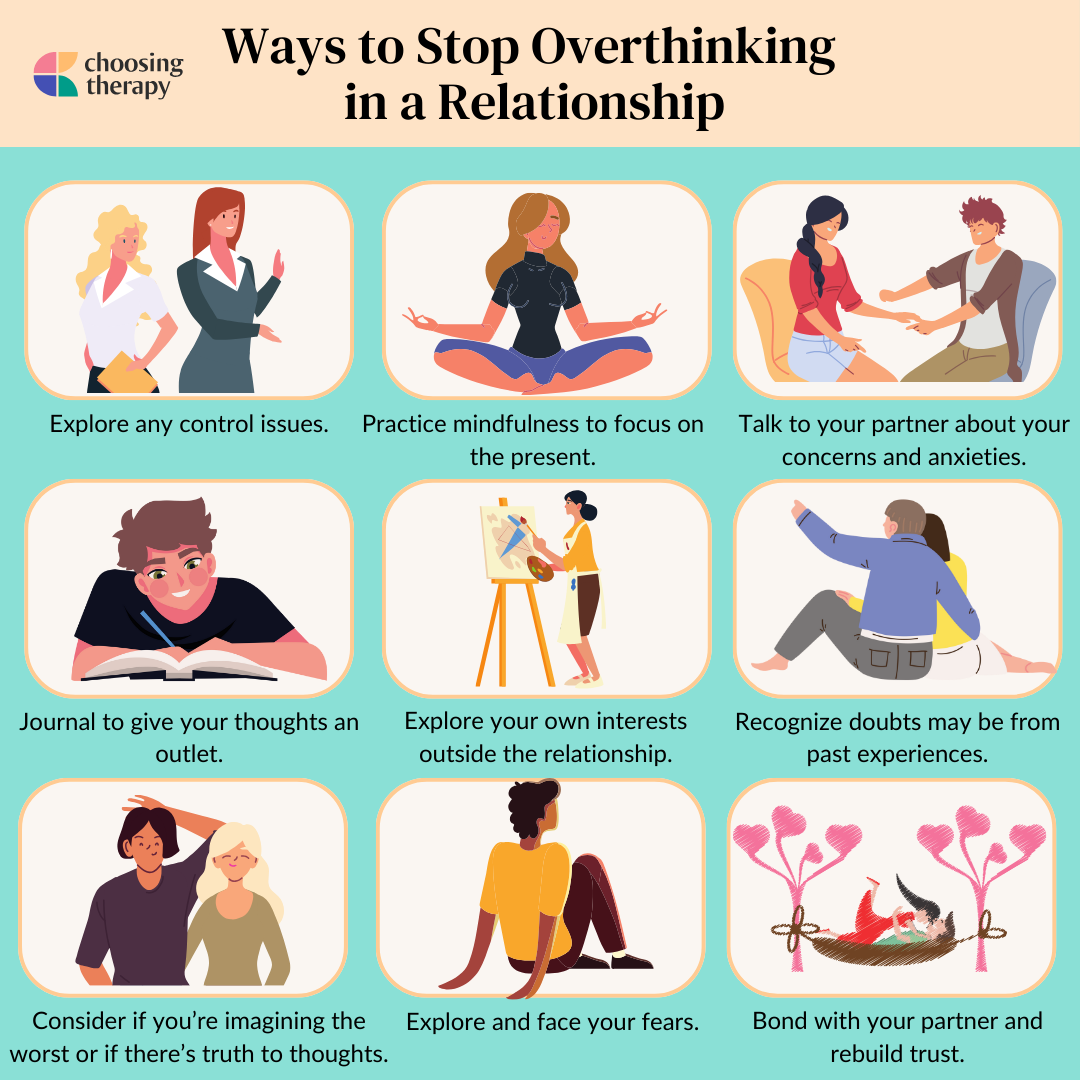
- Recognize how repeated doubt and mental rumination create a cyclical thinking pattern that intensifies relationship uncertainty.
- Identify the cognitive fixation that leads to emotional disconnection and heightens relationship strain.
- Acknowledge the psychological strain and emotional burden that persistent overthinking places on your mental health.
- Understand that emotional turbulence and mental overwhelm fuel the inability to stop the cycle.
- Use this awareness to develop strategies that reduce mental preoccupation and promote emotional connection.
Seeking Professional Guidance: When Overthinking Persists
Seeking professional help can be a highly beneficial step when overthinking in a relationship becomes persistent and starts causing significant relationship suffering. Engaging in couples therapy provides a structured and supportive environment where both partners, regardless of gender, can address issues stemming from anxious attachment styles with the guidance of a trained therapist. This space allows for effective communication, anxiety unpacking, and development of healthy coping mechanisms that improve both men’s mental health and women’s mental health. Whether through online therapy or in-person sessions, accessing mental health support and relationship counseling offers valuable psychological guidance and emotional support. This kind of therapeutic intervention strengthens mental resilience, fosters better emotional regulation, and equips couples with improved communication skills, ultimately promoting relational wellbeing and mental wellbeing as they navigate challenges together.
FAQs Releated to Stop Overthinking in a Relationship
Why do I overthink my relationship so much?
You overthink your relationship mainly due to insecurity and emotional uncertainty caused by lack of feedback and communication gaps. These create a feedback loop of self-doubt, trust issues, and mental preoccupation, fueled by emotional vulnerability and cognitive distortions, leading to ongoing relationship worries and relational anxiety.
How do I help my overthinking partner?
Help your overthinking partner by building trust through consistent actions and fulfilling promises. Show empathy, offer emotional support, and provide gentle reassurance to ease their anxiety. Be patient, invest time and effort, and focus on strengthening your emotional connection to create a solid relationship foundation that supports their mental wellbeing and fosters relational trust.
How to stop being an overthinker?
To stop being an overthinker, first recognize triggers and identify situations and thoughts that spark overthinking. Build awareness around these causes and practice mindfulness techniques like meditation, deep breathing, and yoga to stay in the present moment. Set time and thinking limits to improve cognitive control and mental focus, while using stress management and emotional regulation strategies. Cultivate self-awareness, thought control, and strong mental discipline through consistent mindfulness practice and effective coping strategies.
Do overthinkers love deeply?
Yes, overthinkers often love deeply through intense emotional, mental, and energy investment in the relationship. Their constant worry and fear of loss stem from genuine love sincerity and protective love, reflecting strong relationship dedication and emotional intensity. This results in heartfelt emotions, sincere affection, and a profound emotional attachment marked by both love fear and a desire to cherish and nurture the bond.
What do overthinkers suffer from?
Overthinkers often suffer from psychological distress including anxiety, depression, and other mental health conditions. They experience cognitive overload, mental fatigue, and emotional imbalance, leading to ongoing emotional struggle and thought disruption. Seeking support from loved ones and mental health professionals through therapeutic intervention and mental health care is important for improving their emotional wellbeing.
Does overthinker have high IQ?
Overthinkers can have high intelligence and often exhibit strong critical and analytical thinking skills. Their tendency toward perfectionism and high self-expectations reflects a perfectionist mindset fueled by intellectual capacity and mental acuity. However, overthinking propensity is more about cognitive intensity and mental rigor than IQ alone, shaped by both intellectual tendencies and the pressure of self-imposed standards.
